
The Red Beads
A single complication cannot grade a surgeon. Deming's red beads, M&M, and why surgical quality lives in the distribution, not in one bad outcome.
Lee C. Zhao, MD
Complex and redo surgery of the ureter, urethra, and lower urinary tract, and gender-affirming surgery, explained for patients and for the physicians who refer them.
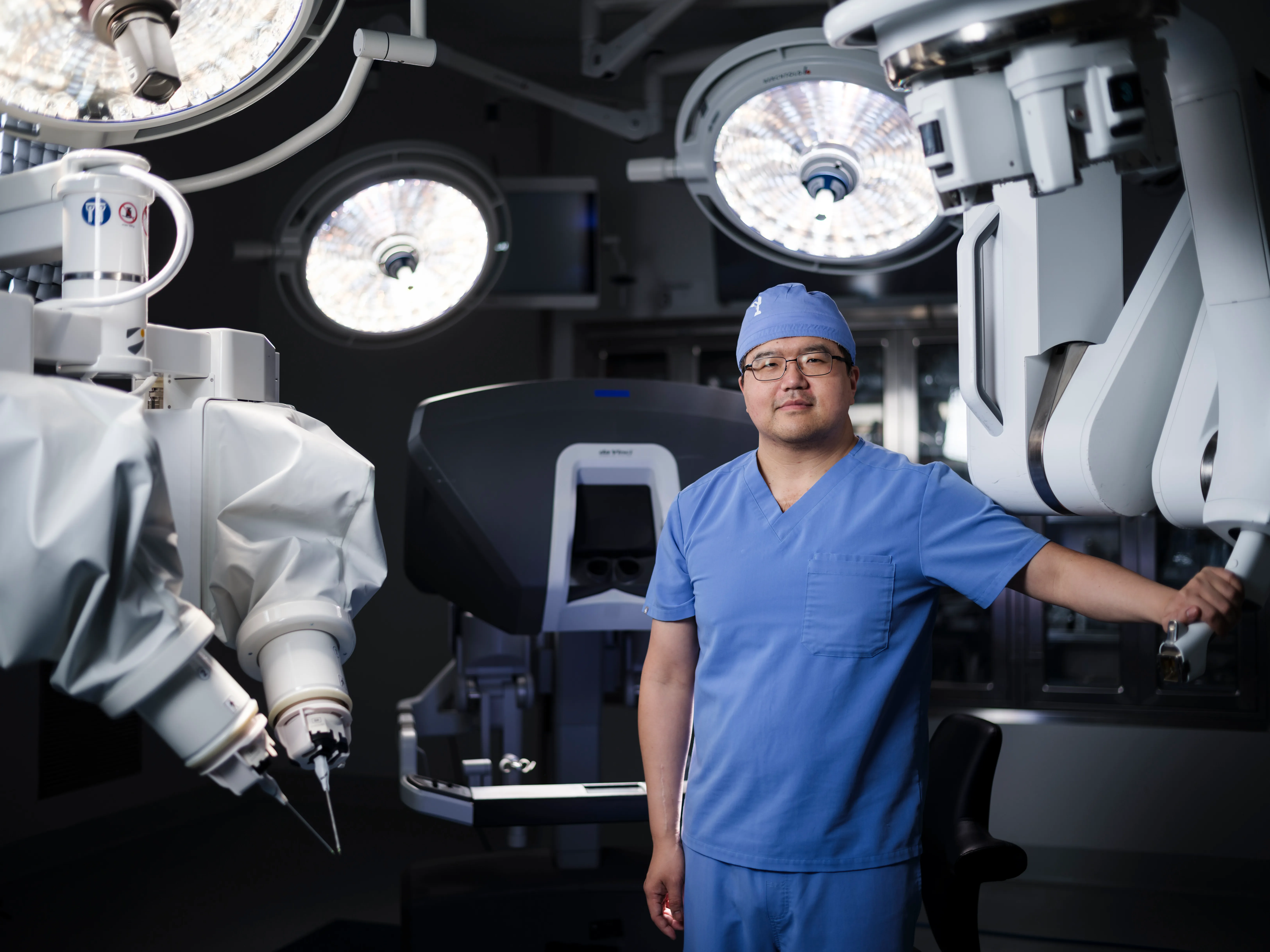
A single complication cannot grade a surgeon. Deming's red beads, M&M, and why surgical quality lives in the distribution, not in one bad outcome.

Mastery means knowing which details carry the operation. A lesson from the bedside, where a missed step nearly put a patient on the floor.

Why a useful surgical idea can wait for generations, and what the history of the buccal mucosa graft reveals about innovation.
Explore female and male anatomy from diaphragm to pelvis. Follow urology lessons and remove organs to uncover quiz targets. Visual demo; not for clinical use.
Explore bladder contraction, outlet relaxation, and urine flow in an interactive 3D teaching atlas. Generic anatomy; schematic mechanics.
Explore a 3D specimen with a bulbar stricture, cutaway views, and dorsal or ventral buccal grafts. Visual demo; not for clinical use.
Explore 20, 40 and 60 mm teaching cases with animated reconstruction and rewind. Visual demo; not for clinical use.
Explore left distal ureter anatomy, reimplantation, psoas hitch, and Boari flap overlays. Visual demo; not for clinical use.
Explore left and right donor kidneys, side-specific vessels and neighboring organs, the ureteral packet, arterial variants, and the harvest sequence. Switch laterality within the atlas. Visual demo; not for clinical use.
Follow one left forearm flap through tube-within-a-tube construction. Work in progress: donor construction only; transfer and later stages remain in the storyboard.
Explore bilateral double-incision mastectomy with free nipple grafts and a separate nipple-preserving approach. Follow flap elevation, resection and closure, or review one step at a time. Illustrative educational animation.
Explore pelvic anatomy, two peritoneal flaps, and the skin-to-peritoneum reconstruction in 3D. Visual demo; not for clinical use.
Explore the retroperitoneum, pelvis, and perineum through surgical approaches and guided tours.
The fellowship year, operative experience, alumni, and how to apply.
Case-based decision training in reconstructive urology.
Urologists per country, density per population, society rolls, and urology meetings since 2000, every figure with its source.
Compare urologist counts and density across US counties, states, and metro areas, with sources and methods.
The fellowship lineage of mentors and fellows, 1990 to 2026.
Alumni and department history.
Rankings, faculty, and research over time.
Residency graduates on a timeline and map.